
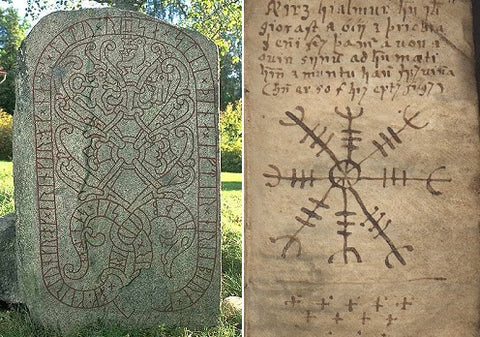
The Elder Futhark is the oldest known form of the runic alphabets, used by early Germanic tribes between the 2nd and 8th centuries AD. These symbols were carved into wood, stone, bone, and metal, serving purposes that ranged from everyday communication to magical rituals.
Origins of the Elder Futhark
Scholars believe that the Elder Futhark was derived from one of the ancient Italic alphabets, possibly influenced by the Etruscan or Latin scripts. It contained 24 distinct characters, each with its own name, sound, and symbolic meaning.
The Name "Futhark"
The name comes from the first six runes: Fehu, Uruz, Thurisaz, Ansuz, Raidō, and Kenaz. Just like the word "alphabet" originates from Alpha and Beta, "Futhark" represents the beginning of the runic sequence.
Uses of Elder Futhark Runes
- Writing & Communication: Used to record important events, ownership marks, and personal names.
- Magical Practices: Believed to possess mystical properties for protection, healing, and fortune.
- Cultural Identity: Served as a shared writing system for scattered Germanic communities.
Decline and Transition
By the 8th century, the Elder Futhark gradually evolved into the Younger Futhark in Scandinavia and the Anglo-Saxon Futhorc in England. This shift reduced the number of runes from 24 to as few as 16, adapting to language changes.
Legacy of the Elder Futhark
Today, Elder Futhark runes remain a powerful cultural and historical symbol. They are studied by linguists, embraced by neopagan communities, and used in art, jewelry, and tattoos as a connection to ancient heritage.